
 (469) 346-8828
 5030 S, TX-360 #200, Grand Prairie, TX 75052
 Offers
 Forms
FormsInvisalign - Grand Prairie, TX
Straighter Teeth
the Easy Way
Modern dental technology is amazing, and nothing illustrates this better than Invisalign. Now, instead of having to get noticeable metal braces to straighten your teeth, you can instead opt for a discreet and comfortable treatment that has already helped millions of people around the world. At Care 32 Dental of Grand Prairie, we combine Invisalign with our 3D iTero scanner to make the process as efficient and comfortable as possible. To schedule a consultation and start on your road to a renewed smile, contact us today to learn more about Invisalign in Grand Prairie, TX.

Why Choose Care 32 Dental of Grand Prairiel for Invisalign?
-
Fully Customized Treatments
for Each Patient -
Putty-Free
Digital Impressions -
Preview Your Results Using
Our 3D iTero Scanner
How Invisalign Works
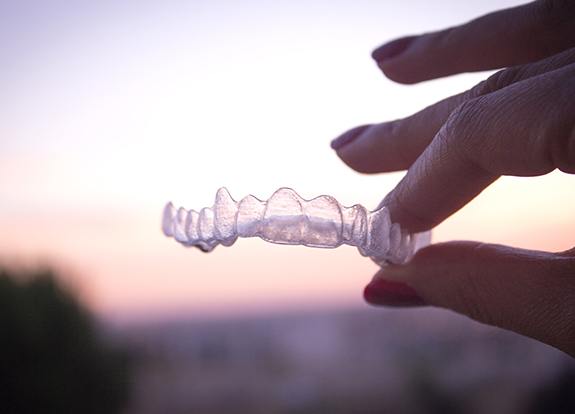
Invisalign actually has a lot in common with regular braces, in that it involves applying a very small amount of force to shift the teeth into their new positions. Instead of using brackets and wires to do this, however, Invisalign instead relies on a series of clear plastic aligner trays. Each one is uniquely shaped to bring a patient a step closer to their final result. And, unlike braces, a patient can take off their trays whenever they like, allowing them to eat and brush their teeth like normal throughout treatment.
Who Can Invisalign Help?

If you want to straighten your teeth without the metal, the best thing to do is schedule a consultation with our team at Care 32 Dental. That way, we can learn all about your dental history, needs, and goals to determine if you’re a good candidate. You’re also welcome to read on if you want to learn more about who Invisalign can help in the meantime!
Crowded Teeth
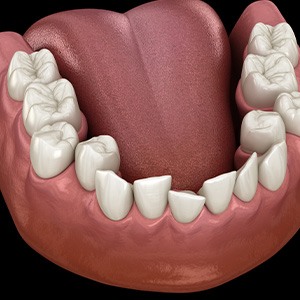
If there isn’t enough room in your mouth for your teeth to sit in their perfectly aligned positions, then they will overlap. Unfortunately, even relatively mild cases of overcrowding can have a negative impact on your self-esteem and oral health. That’s why we recommend exploring your orthodontic treatment options sooner rather than later. You may be surprised to learn that Invisalign is one of them!
Gaps Between Teeth

While some patients don’t have enough space in their mouths for their teeth to sit in their perfectly aligned positions, others are struggling with the opposite problem. If that’s the case for you, then schedule a consultation with us so we can determine if you’re a good candidate for Invisalign! If you are, then we can gently close the gaps with clear, comfortable, and convenient aligners.
Overbite
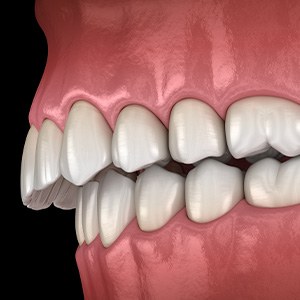
Do your upper teeth extend beyond your lower ones more than they should? If so, you may have an overbite. This orthodontic problem can lead to several issues, including trouble enunciating clearly, so it’s important to schedule a consultation with us, even if your case is relatively minor. The sooner you do, the sooner we can determine if you’re a good candidate for Invisalign!
Underbite
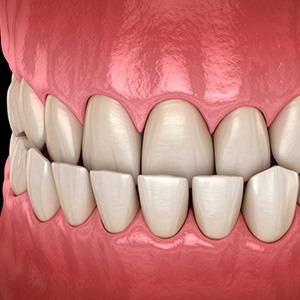
Underbites can lead to several issues, including trouble chewing properly, smiling confidently, and enunciating clearly. There is good news, though: Invisalign is often a solution for patients who are struggling with mild to moderate cases. If we determine that you’re a good candidate, then your journey to a straighter, healthier smile won’t involve any metal at all.
Crossbite
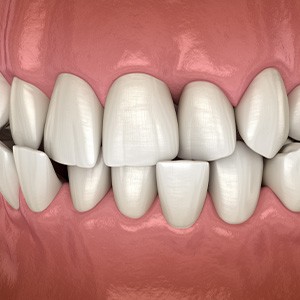
Do only some of your upper teeth sit behind your lower ones? If so, you might be wondering if Invisalign can fix crossbites. The short answer is “yes!” During your consultation, we will assess the severity of your case and determine if you’re a good candidate for clear aligners. If you are, then we will begin working on your custom treatment plan and determine if any orthodontic accessories are needed, like buttons.
Open Bite
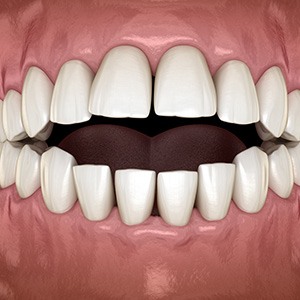
When you bite down, your upper and lower teeth should meet evenly. If they don’t, then you may have an open bite. Like the other orthodontic problems listed here, several issues can arise if left untreated, including premature wear and tear on your teeth. So, don’t wait – schedule a consultation with us so we can determine if Invisalign is the ideal solution for you.
Benefits of Invisalign
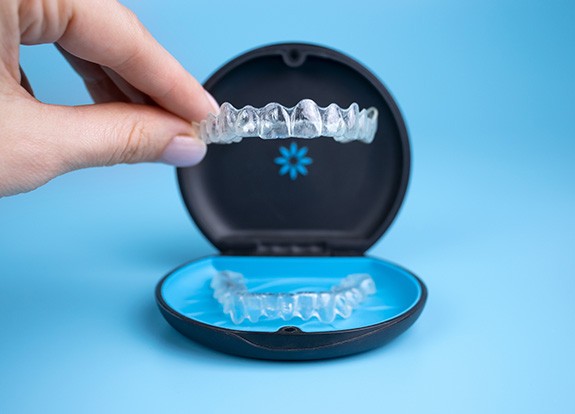
Although traditional braces are the tried-and-true solution for straightening smiles, Invisalign continues to gain popularity as a clear alternative. This treatment utilizes transparent plastic trays designed to fit snugly over your teeth, rather than relying on bulky metal brackets and wires.
These aligners exert enough pressure to gently shift them, which provides unique advantages over the standard method. Continue reading to learn about several benefits of choosing Invisalign to upgrade your grin!
Improved Patient Comfort

The sharp edges of metal braces are notorious for gouging the tender tissues inside patients’ mouths, leaving wounds and sores that can potentially become infected. Meanwhile, the smooth trays of Invisalign don’t have corners or clipped wires, which enhances patient comfort.
However, you may feel sore for a little while when you first start wearing new aligners until your mouth acclimates to their presence on your teeth.
Less Invasive Treatment
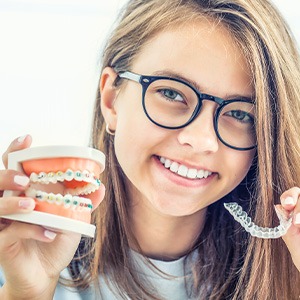
Traditional orthodontics are cemented to your enamel for the duration of your treatment, but Invisalign is removable. The trays can be taken out for meals and cleanings, so they have less of an impact on your daily habits and routines.
For instance, you can eat all your favorite foods without worrying about dietary restrictions because they’re not intended to be worn during meals. It’s also easier to maintain a twice-daily dental hygiene routine without having to purchase special cleaning supplies, like floss threaders and interproximal brushes.
Discreet, Transparent Trays
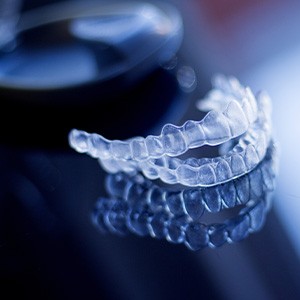
Some patients with braces worry that they’ll be judged for their appearance, so they opt for Invisalign instead. This service relies on aligners made from completely transparent plastic, which allows your natural enamel to shine through. You’ll be able to speak and smile knowing that your orthodontics are less likely to draw unwanted attention.
Easily Maintain Your Dental Hygiene

These removable trays also make it easier to preserve your dental health throughout treatment, so your teeth and gums are as healthy as they are beautiful when it’s complete.
You’re less likely to develop cavities or gum disease than patients with braces because the aligners can be taken out, allowing you to brush and floss as usual. This scrubs away plaque and bacteria that contribute to many common oral concerns, helping to prevent potential issues.
Boost Your Confidence

You’ll be instructed to switch to the next set of trays in your series every week or two to account for the ongoing movement of your teeth. That means you’ll start to see changes within just a few weeks of starting treatment.
These clear aligners allow your natural teeth to be seen without obstruction, so that you can show off the results in real time, which can improve your self-esteem.
Enjoy Faster Follow-Ups
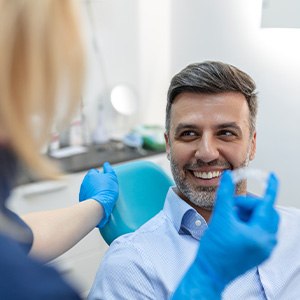
Our team in Grand Prairie will need to see you every six to eight weeks to ensure you’re on track with your treatment timeline. Thankfully, these visits tend to be quicker than follow-ups for traditional braces because there’s no need to adjust an archwire or recement brackets into place. In fact, you could be in and out in as few as 15 to 30 minutes!
Invisalign TEEN
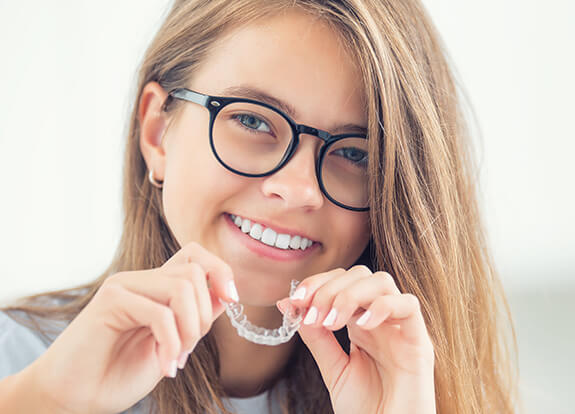
Care 32 Dental of Grand Prairie can use Invisalign to not just help adults, but teens as well! It’s perfect for anyone who wants to improve their appearance while keeping their normal look day to day, whether they are in the boardroom or the classroom. Regular Invisalign can straighten the teeth at any age, and with Invisalign TEEN, small indicator dots on each aligner help children and parents easily keep the treatment on track. It also comes with a set of FREE replacement aligners.
How is Invisalign TEEN Different?

Invisalign TEEN works the same way as regular Invisalign, in that a custom-designed series of clear plastic aligners is used to gradually shift the teeth and balance the bite. Both the indicator dots and replacement trays are there simply because while teens aren’t young children, they aren’t exactly adults either. They can be forgetful, and these extras make it much easier for them and parents to stay on track despite trays occasionally “disappearing” or being “stolen.”
Is Invisalign Right for Your Teen?

If your teen could benefit from orthodontics, and they don’t have severe bite issues or crowding, then Invisalign TEEN is likely a good fit for them clinically. But will it suit their personality? This treatment requires a little more discipline on the patient’s part compared to regular braces. Rather than being affixed to the teeth, a teen has to make sure to wear the trays at least 20-22 hours a day as well as clean them after each meal and snack.
The Benefits of Invisalign TEEN

- Subtle Appearance: Between social media and phones/cameras being everywhere, teens are more self-conscious than ever before. Invisalign TEEN allows them to get the treatment they need without stressing about how they look.
- Easier Oral Hygiene: Brushing and flossing can be tricky with metal braces. But with Invisalign, the trays are removable, meaning your teen can brush and floss like normal.
- Not Diet Changes: A teen can eat whatever they like with Invisalign, meaning they (as in you) don’t have to make any big changes to their diet, letting the treatment fit seamlessly into their day-to-day.
Invisalign & Teeth Grinding
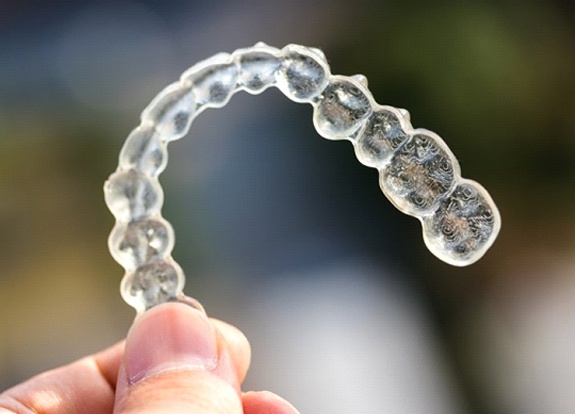
Invisalign can help you achieve a beautiful smile, but more importantly, it aims to give you a healthy, pain-free grin. Correcting crooked, overcrowded, or gapped teeth will definitely give your appearance a boost, but it will also help your jaws fit together properly. In turn, this can protect your jaw joint, prevent issues like TMJ disorder, and even potentially treat teeth grinding. Can Invisalign really help you stop grinding your teeth? Read on as we go over everything you need to know.
Signs That You Grind Your Teeth

You may grind your teeth without realizing it. Many people grind their teeth in their sleep, which can make it a difficult problem to identify on your own. However, the warning signs of teeth grinding are not so easy to miss! You may grind your teeth or clench your jaw at night if you suffer from:
- Morning headaches or jaw soreness
- Tooth sensitivity or tooth pain
- Chipped, cracked, or flattened teeth
- Receding gums or teeth that look longer
- Damage on the inside of your cheek from chewing
While it may be difficult for you to tell if you grind your teeth in your sleep, an experienced dentist like Dr. Desai will be able to tell right away with a quick examination. If you suspect you grind your teeth, don’t hesitate to contact us today!
Why Teeth Grinding Is a Problem
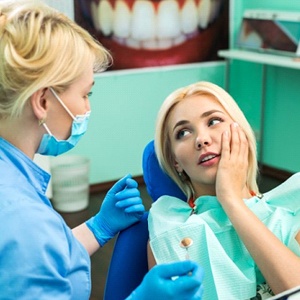
Grinding your teeth in your sleep is a condition known as bruxism. Sometimes, it can occur temporarily or sporadically because of stress. Other times, it may be a chronic issue due to a problem with your temporomandibular joint or jaw misalignment. Treating bruxism early is the best way to address and reverse the symptoms we mentioned above. Additionally, taking steps to stop teeth grinding can help prevent serious problems in the future, such as cracked teeth or dental infections. In extreme cases, you may develop a condition known as TMJ disorder, which can interfere with your daily life and require treatment via surgery.
How Invisalign Fixes Teeth Grinding

So how can you treat bruxism while getting a straighter smile? Invisalign can help by:
- Protecting teeth from grinding: Like a nightguard, Invisalign clear aligners can act as a protective barrier between your teeth to prevent damage from grinding.
- Reprograming jaw muscles: Your jaw muscles will need to adjust to the presence of Invisalign aligners, which will essentially retrain them to not clench or grind.
- Fixing bite issues permanently: Invisalign has the potential to permanently correct misaligned jaws and bite issues that could be the root source of your bruxism.
Can Invisalign Help You Stop Grinding Your Teeth?
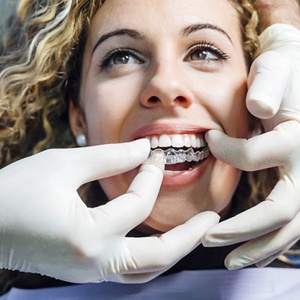
Invisalign isn’t the ideal treatment option for everyone who grinds their teeth. For some people, wearing aligners makes them want to clench their teeth more often. In other cases, the bruxism may be too strong and damage the aligners. The best thing to do is to come see us here at Care 32 Dental for an evaluation. Invisalign is just one way to address bruxism, and a custom-made nightguard may be a more effective choice for you. Dr. Desai will help you determine the best way to treat your teeth grinding and achieve the happy, healthy, and pain-free smile you deserve!
Living with Invisalign Aligners
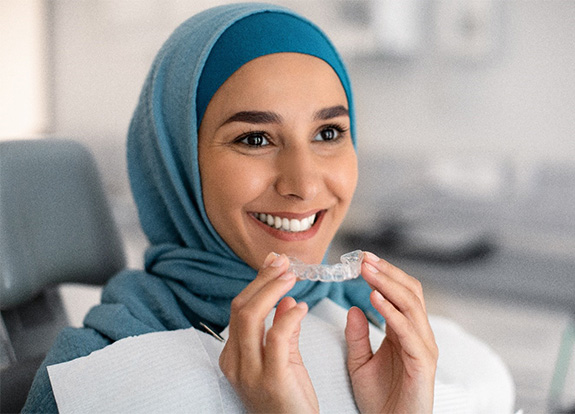
Compared to other orthodontic treatments, Invisalign doesn’t have a long adjustment period. With that said, implementing the guidelines that should be followed is extremely important. That’s why we’ve dedicated this next section to covering life with Invisalign! To stay on track with your treatment plan, make sure to keep the following information in mind:
Wearing Your Trays
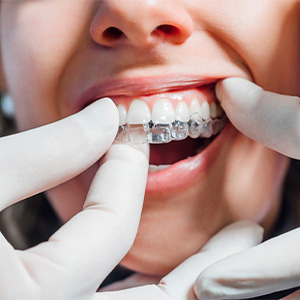
There’s one main “rule” when it comes to wearing your trays: you need to wear them for 20-22 hours a day. If you consistently miss the mark, then you’re significantly more likely to experience delays, which can be frustrating and may even require an entirely new treatment plan to be made. That’s why we encourage our patients to only take them out when absolutely necessary, like before eating.
Cleaning Your Aligners
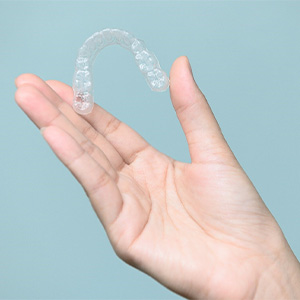
Preventing stains is often simpler than patients expect. In addition to not drinking any dark-colored beverages, like coffee, with your aligners in, make sure that you are cleaning them after each meal with a soft-bristled toothbrush and clean, cool water. If you want to give them a deeper clean, you can always use the cleaning crystals that came in your welcome kit too!
Eating & Drinking

Since you can take your aligners out, patients don’t have to worry about completely altering their diet with Invisalign! With that said, many find it helpful to stick to soft foods in the hours following the transition to a new aligner. It’s also worth mentioning here that a cavity can bring your treatment to a temporary stop, so do your best not to over-indulge on sugar.
Losing or Damaging a Tray

The worst thing you can do is try to take matters into your own hands by using super glue to “repair” your tray or moving onto the next set because you lost your current one. This can lead to numerous consequences, which is why we always recommend giving our Grand Prairie dental team a call instead. From there, we can determine the best way to proceed.
Routine Check-Ins
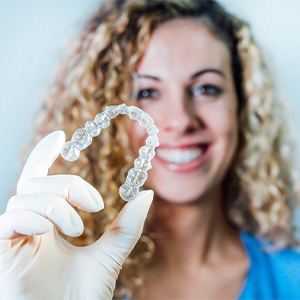
Throughout your Invisalign treatment, you’ll come into our office for check-in appointments. Although they are usually pretty quick, they are important because they allow us to monitor the movement of your teeth compared to your treatment plan. If your teeth aren’t tracking as anticipated, we can make adjustments, helping to prevent significant delays down the line.
If any questions come up throughout your treatment, don’t hesitate to let us know. Remember, we aren’t just here to give you a gorgeous smile; we’re also here to give you the phenomenal treatment experience you deserve.
3D iTero Scan
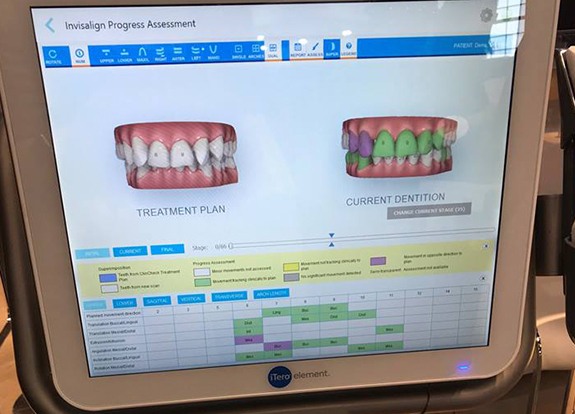
Each Invisalign treatment we provide is 100% custom-made for each patient, and it’s designed using our 3D iTero scanner. It allows us to take an extremely accurate digital impression of the mouth without relying on goopy and odd-tasting dental putty. With this model, we can map out someone’s treatment plan with extreme precision so the teeth move as quickly as possible. Plus, the technology allows us to show a patient what their teeth will look like after Invisalign, giving them something to look forward to while providing tremendous motivation to keep their treatment on track. We can perform a smile simulation so you are able to see in real time what your dramatic smile transformation will look like.
Understanding the Cost of Invisalign
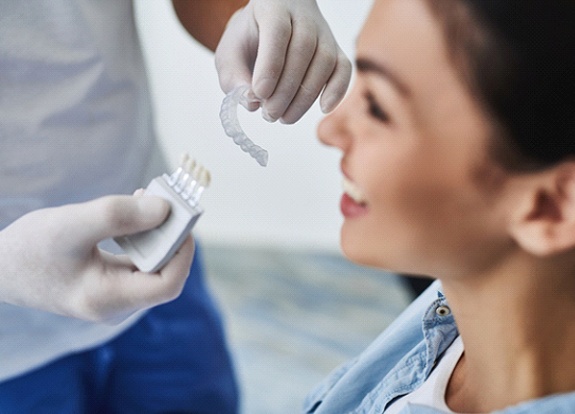
Are you tired of hiding your crooked teeth every time you speak or laugh? If so, you may be more ready than ever to start your Invisalign journey. However, before committing to anything, you’re probably wondering how much your treatment plan will cost. Well, the answer truly varies from patient to patient depending on many factors. At your consultation with Dr. Desai, our team will be more than happy to provide you with an accurate cost estimate and explain your financing options. To learn more, continue reading or make an appointment today!
What Factors Affect the Cost of Invisalign?
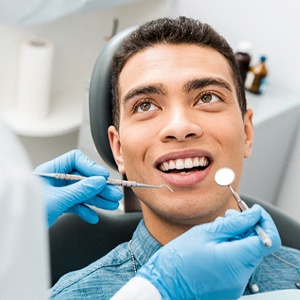
Various factors influence the cost of Invisalign in Grand Prairie, including:
- The length of treatment. Depending on the severity and type of your dental misalignment, you may need more aligners than average which means a longer treatment time and higher cost.
- Whether you’re straightening one arch or both. Naturally, straightening both the upper and lower teeth will cost more than straightening just one or the other.
- Your compliance with treatment. Keep track of your aligners! Losing one means you’d have to pay for a replacement.
- Whether you require additional accessories. Some patients might need extra accessories like small elastics for successful treatment.
Invisalign vs. Smile Direct Club™: Which Costs More?

Do-it-yourself clear aligner treatments like SmileDirectClub™ have become increasingly popular in recent years. They usually cost around $2,000, while Invisalign in Grand Prairies may cost anywhere between $3,000 and $8,000. Although the lower price point of DIY treatment is certainly attractive, it’s important to keep in mind that you get what you pay for.
SmileDirectClub™ is a do-it-yourself clear aligner kit that comes with little to no supervision from a dental professional. Many things can go wrong throughout the process, leading to issues that will need to be corrected by a professional and cost you thousands of dollars. In fact, some people claim this option has made their misalignment worse!
On the other hand, you can enjoy personalized support and guidance from our team during your Invisalign treatment plan. We’ll be there every step of the way to monitor your progress and ensure you’re on track. Even though Invisalign isn’t as affordable as SmileDirectClub™, the cost is worth having a smoother and more successful treatment overall. Not only will you have the trusted oversight of Dr. Desai, but you’ll have professionally made and highly accurate impressions. Quality should always be of utmost importance, regardless of cost.
Does Dental Insurance Cover Invisalign?

Although some dental insurance policies offer coverage for orthodontic treatment, Invisalign is usually left out in those plans. Since that’s not always the case, it’s best to check with your dental insurance company to understand what’s covered. At your initial visit, our team will gladly explain your coverage and how you can use it to your greatest advantage.
Options for Making Invisalign Affordable

At Care 32 Dental of Grand Prairie, we currently offer a special where you can get a custom-designed Invisalign treatment for as low as $209 a month pending credit approval. If you start treatment the same day as your consultation, we’ll even take $500 off the overall price! Additionally, we offer the following financing options to help make your dental bills easier to manage:
- In-House Discount Plan – For one low price, this plan covers preventive services for the entire year and gives you access to reduced fees on a list of other services.
- CareCredit Financing – This option will break up the total cost of your treatment into smaller, budget-friendly monthly installments. Since there are many plans to choose from, you’re guaranteed to find one that’s perfect for your budget!
If you want to learn more about the cost of Invisalign in Grand Prairie, contact us today to schedule a consultation. We’ll explain your financing options and find a way to fit your treatment plan into your budget.
Invisalign FAQs
How Often Do I Have to Wear Invisalign Aligners?
For your treatment to finish on schedule, you should plan on wearing your aligners for at least 20 to 22 hours a day. Essentially, you should only take them out for eating or cleaning your teeth. You may also remove them for special events, like a job interview, provided you place them right back in afterward.
Although 22 hours a day may seem like a lot, it is necessary. It takes time for the aligners to exert pressure on your teeth and shift them into their ideal positions. Going several hours per day without wearing the aligners will cause your teeth to move more slowly, extending your treatment time.
Does It Hurt to Wear Invisalign Aligners?
While Invisalign does place gentle pressure on your teeth, most patients do not feel it. However, you may experience some soreness when you first begin treatment, or when you switch to a new set of aligners in the series. This discomfort should fade within a few days and should never result in outright pain. Over-the-counter pain relievers like acetaminophen can help until then.
How Long Does Invisalign Treatment Take?
Because every Invisalign treatment is customized to meet each patient’s unique needs, the only way to find out how long it will take to straighten your smile is to schedule an initial consultation with us. At this visit, we can evaluate the severity of your orthodontic issues and estimate a treatment timeline. On average, most patients finish Invisalign between eight and fourteen months, which is significantly shorter than metal braces.
Are the Results of Invisalign Permanent?
As with any orthodontic treatment, you will need to wear a retainer for a certain amount of time after you’re finished with Invisalign. Your retainer will most likely be another set of clear trays, so there won’t be a huge adjustment. Depending on the specifics of your case, you’ll probably have to wear your retainer 22/7 for a few days or weeks, but after that, we may tell you that you only have to wear it to bed.
What Happens After Invisalign?
After you’ve completed wearing your final set of clear aligners, you’ll go visit your dentist to confirm that you’ve achieved your desired results. They’ll look over your smile to see that your teeth have straightened into their ideal positions before discussing how you’ll need to maintain your newly aligned pearly whites.
This typically involves wearing a retainer that is very similar to your regular aligners, or they can be wired ones, but they’ll only be designed to hold your teeth in place. These will be essential for preserving your results, as your teeth might want to revert to their original places and angles. First, you’ll need to wear them 22/7 like normal Invisalign trays. Over time, you’ll gradually just need to wear them overnight. By doing so, you can expect to enjoy permanently straightened teeth for the rest of your life!
What If My Invisalign Broke?
While Invisalign aligners are durable, they can still become damaged or break. If you notice a hairline crack, you may be able to continue using it. Of course, you’ll need to be extra careful when handling them by using even pressure when putting them back on and limiting any bending of the tray. Do NOT try repairing your aligners on your own, as products like superglue are hazardous and toxic to humans.
Whether the damage is minor or severe, notify your dentist so they can instruct you on what to do next while they work on providing you with new trays. Reduce your risk of damaging your aligners by taking them out before every meal or drink (other than pure water) and placing them in a protective case. Also, place a towel on the sink or floor when cleaning them to break their fall if you accidentally drop them.
Can You Eat with Invisalign?
You should never eat anything with your Invisalign trays on. Since they’re removable, it’s best to remove them before eating or drinking anything other than non-flavored water. Chewing on anything or eating while they’re in can easily cause them to get cracked, stained, or damaged. Remember to take them out and clean them thoroughly before wearing them again. Once they’re off and in a safe place, you can feel free to enjoy most of your favorite meals!
Can Invisalign Fix an Overbite?
Some overbite is common, but some people may have serious jaw misalignment that can cause front teeth to drastically overlap their bottom arch. This can create various complications with both your bite and smile. If you have a mild or moderate overbite, or another mild-moderate alignment problem, then you might be able to undergo Invisalign treatment to fix it. However, if the overbite is too severe, then clear aligners may not be able to resolve the issue on their own. Your dentist might suggest undergoing traditional braces or another orthodontic process to fix your bite. Of course, make sure to consult your dentist or orthodontist so that you can know for certain if Invisalign is a viable option or not.